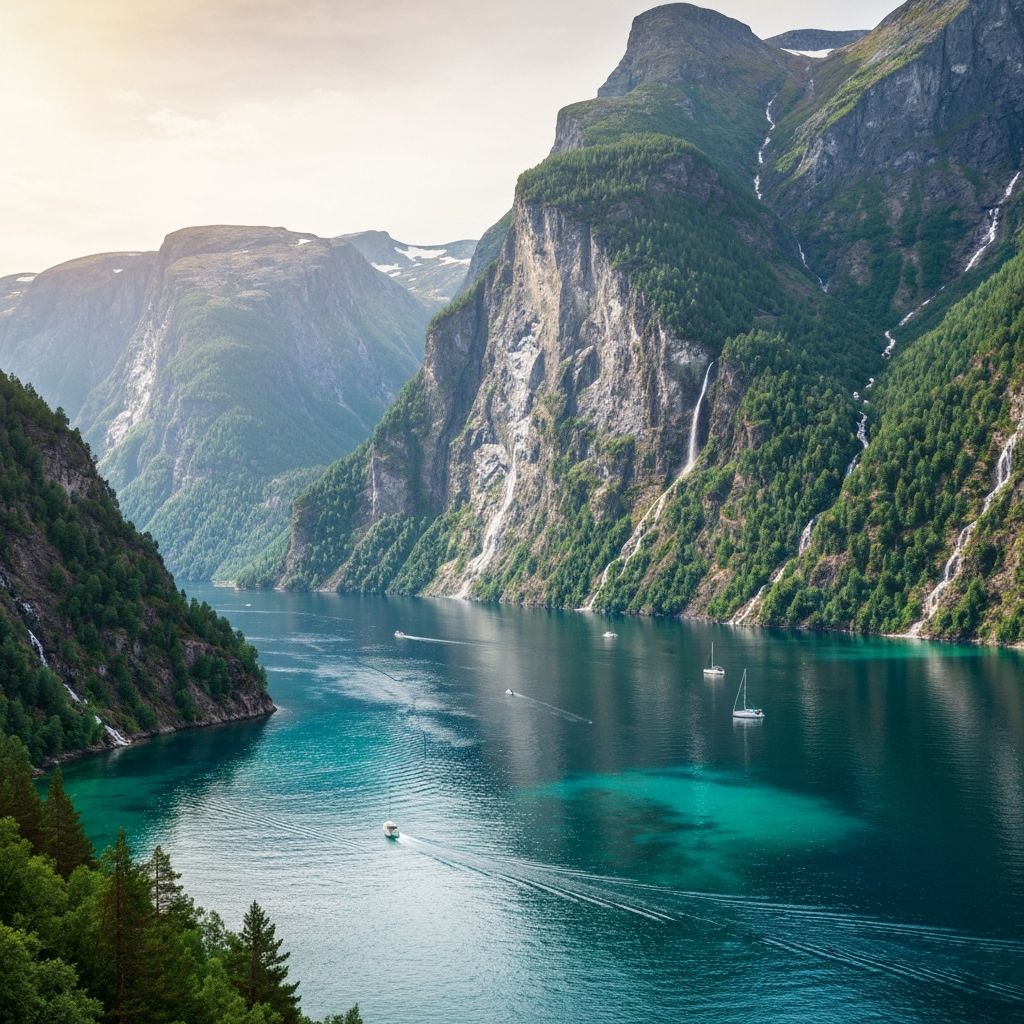
You can learn the language, master the supermarkets, even develop opinions about ribbe versus pinnekjøtt, but you are not actually integrated until you've voluntarily walked uphill in horizontal sleet and called it a nice Sunday. That's friluftsliv, and it is the closest thing secular Norway has to a state religion.
Quick facts: Friluftsliv
- Meaning: "open-air life," nature as everyday practice, not occasional hobby.
- First in print: Henrik Ibsen's 1859 poem "Paa Vidderne" (On the Heights).
- Participation: roughly 9 in 10 Norwegians practice it yearly; 4 in 5 hike at least once a year.
- Legal backbone: allemannsretten, the right to roam, codified in the 1957 Outdoor Recreation Act.
- Core ritual: the søndagstur (Sunday walk), with matpakke and Kvikk Lunsj.
- Official weather policy: there is no bad weather, only bad clothing.
What friluftsliv actually is
The word breaks down to fri (free), luft (air), liv (life), and it entered literature in 1859 when Ibsen used it in a poem about finding clarity in the high mountains. What Ibsen framed as spiritual retreat, modern Norway turned into infrastructure: kindergartens where children nap outside in winter, offices that empty at 3pm on sunny Fridays, and a default question of "skal vi gå en tur?", shall we go for a walk, deployed as the solution to boredom, conflict, romance and grief alike.
The crucial part for foreigners: friluftsliv is not extreme sports. Norway certainly produces cliff-jumping lunatics, but the daily practice is defiantly ordinary. A thermos of coffee, an orange, a rock with a view. Presence over performance.
"In California, going outside is what you do when the weather is nice. In Norway, going outside is what you do, and the weather can attend if it wants."
The numbers behind the mythology
This isn't marketing. Surveys consistently show around 9 out of 10 Norwegians engage in friluftsliv over the course of a year, and 4 out of 5 take at least one forest or mountain hike annually. The most popular version is the least glamorous: a walk in the nearest green area, ideally within 500 meters of home. Which explains Norwegian city planning, where the forest isn't outside the city, it's woven into it, tram-accessible, with a lake at the end.
The legal miracle: allemannsretten
Friluftsliv works because the law guarantees access. Allemannsretten, the right to roam, was codified in the 1957 Outdoor Recreation Act and lets anyone walk, ski, swim and camp on uncultivated land, even privately owned, for up to two nights, free, provided you keep 150 meters from houses and leave no trace. An entire nation functioning as a public park is the kind of policy that sounds utopian until you watch it work flawlessly for seven decades, running on nothing but trust and the fear of being judged by strangers.
The rituals
The centerpiece is the søndagstur, the Sunday walk, non-negotiable in most families and calibrated so that everyone from toddlers to grandmothers completes it. Provisions follow strict liturgy: matpakke sandwiches, a thermos, an orange, and a Kvikk Lunsj, the chocolate legally distinct from KitKat and spiritually distinct from all other food. Winter friluftsliv means cross-country skiing, because Norwegians are, per the saying, born with skis on. Summer adds fjord swimming and slow evenings at the hytte, the cabin where Wi-Fi goes to die and families remember they like each other.
How to start without embarrassing yourself
Rule one: clothing. The national proverb, det finnes ikke dårlig vær, bare dårlige klær, there's no bad weather, only bad clothes, is meant literally; wool base layers are how Norwegians dress for a reason, and cotton is regarded as a character flaw. Rule two: humility in the mountains. Read the fjellvettreglene, the mountain code Norwegians internalize as children, because the weather rewrites plans without notice. Rule three: lower the bar. Your first friluftsliv outing can be a 40-minute walk in the local woods ending in coffee. That's not the beginner version. That IS the thing.
Why it matters beyond the postcard
Friluftsliv is Norway's mental health budget, social equalizer and koselig supply chain in one. It costs nothing, which in the country with famously expensive everything makes it the best deal available. And it explains the people: a nation this comfortable with silence, weather and walking uphill was always going to be hard to meet at a party and easy to befriend on a trail. Start there.
Common questions about friluftsliv
What does it mean?
"Open-air life": nature as an everyday practice. First printed in Ibsen's 1859 poem "Paa Vidderne."
Do Norwegians really do it?
About 9 in 10 participate yearly; the most common form is a simple walk near home.
Is it legal to camp anywhere?
On uncultivated land, yes, up to two nights, 150m from houses, leave no trace, under allemannsretten (1957).
What do I need to start?
Wool layers, a thermos, a matpakke, a Kvikk Lunsj, and a tolerance for weather. No summit required.
Ready to practice? Begin with the gear (dress like a Norwegian), learn the safety canon (fjellvettreglene), and claim your first campsite with allemannsretten.