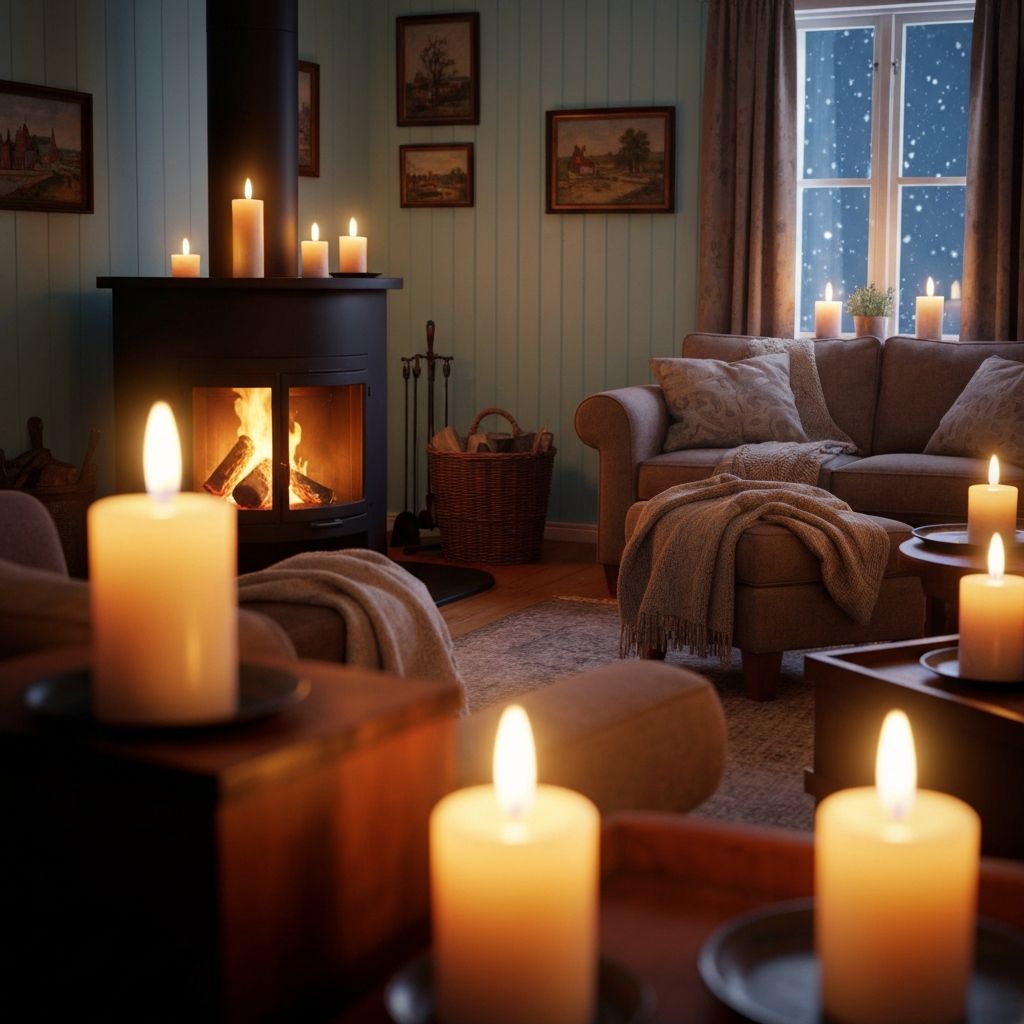
My first Norwegian Christmas, I learned three things: the party happens on the 24th, the pork has a crackling layer engineered to NASA tolerances, and there's a gnome who gets a bowl of porridge or else. Search interest in "Christmas in Norway" spikes every November, so before this year's spike: here is the entire operating manual for jul.
Quick facts: Norwegian Christmas (jul)
- Main event: Christmas Eve, December 24th, dinner and presents same evening.
- The dinner divide: ribbe (pork belly) rules the east, pinnekjøtt (lamb ribs) the west.
- Red days: December 25th and 26th are both public holidays.
- Romjul: the sacred do-nothing week between Christmas and New Year.
- Julebord: the work Christmas party, an annual controlled demolition of Norwegian reserve.
- The nisse: gets rice porridge, or your farm suffers. Rules are rules.
The calendar: everything shifts one day early
Advent kicks off with lit candles, paper stars in windows and julebrus in the stores. December 23rd, lille julaften, is for decorating the tree and, in many households, watching Grevinnen og Hovmesteren, an 11-minute black-and-white German-British sketch that Norway adopted as core national heritage for reasons no one can fully explain. The 24th is the show: church for some at 4pm as the bells ring in Christmas, dinner, then presents that same evening, because Norwegians correctly identified that making children wait until the 25th is a human rights issue. The 25th and 26th, første and andre juledag, are red days reserved for leftovers and slow visits. Then comes romjul, the liminal week where nobody works, nobody knows what day it is, and the country collectively power-saves until New Year's Eve.
The great meat divide
Christmas dinner is regional identity on a plate. In the east, it's ribbe: pork belly roasted until the crackling shatters, eaten by roughly 44% of the country and about three-quarters of easterners. In the west and along the fjords, it's pinnekjøtt: salted, dried lamb ribs steamed over birch sticks, about a third of the country nationally and around 75% in the west. Smaller factions swear by lutefisk, fresh cod or turkey. Marrying across the ribbe-pinnekjøtt line remains Norway's most successful integration program, and the annual negotiation over which dish gets the 24th is diplomacy at its rawest.
"Ask a Norwegian 'ribbe or pinnekjøtt?' and you'll learn their hometown, their in-law situation, and their capacity for compromise, in that order."
Feed the gnome
Presents come from julenissen, a merger of imported Santa and the fjøsnisse, the barn gnome of Norwegian folklore who protected your livestock in exchange for rice porridge and sabotaged your entire farm if you stiffed him. Families still set out a bowl of porridge, and julenissen himself arrives in person on the 24th asking "er det noen snille barn her?", are there any nice children here, while wearing the unmistakable build of a neighbor. The same rice porridge appears at lunch as risengrynsgrøt with an almond hidden in one bowl; the finder gets a marzipan pig and bragging rights.
Julebord: the annual personality exchange
November and December belong to the julebord, the work Christmas party where the colleague who hasn't made eye contact since March delivers a heartfelt speech, and the org chart dissolves somewhere around the third aquavit. It has its own survival guide for a reason, and the nachspiel afterward is where the real bonding happens. What happens at julebord is discussed at no fewer than zero future meetings.
The tastes and the soundtrack
Baking tradition demands syv slag, seven kinds of Christmas cookies, a quota treated with suspicious seriousness. Pepperkaker (gingersnaps) get built into houses and eaten as rubble. Gløgg (mulled wine) handles the cold, julebrus handles the children and the sober, and Christmas beer handles everyone else, within Norway's alcohol rules, which do not take holidays. On the 24th, half the country watches Tre nøtter til Askepott, a 1973 Czechoslovak Cinderella film dubbed by a single Norwegian man doing all the voices. Again: adopted heritage, fiercely defended.
A tree for London
Since 1947, Norway has shipped a giant spruce to London's Trafalgar Square every year as thanks for British support during the war. Norwegians quietly love this tradition, even during the years the British press rates the tree's appearance like it's a contestant on a talent show. Sending someone a 20-meter tree annually for 75+ years and counting is the most Norwegian form of emotional expression ever devised.
Common questions about Christmas in Norway
When is the main celebration?
Christmas Eve, December 24th: dinner, then presents the same evening. The 25th and 26th are public holidays.
Ribbe or pinnekjøtt?
Ribbe (pork belly) in the east, roughly 44% nationally; pinnekjøtt (lamb ribs) in the west, about 34% nationally.
What is romjul?
The week between Christmas and New Year, dedicated to leftovers, skiing and institutional laziness.
What is riskrem?
Rice cream dessert with one hidden almond; the finder wins a marzipan pig.
To complete your Norwegian holiday education, read up on the julebord, the lille julaften TV ritual, and how the other big holiday works: Norwegian Easter, explained.